


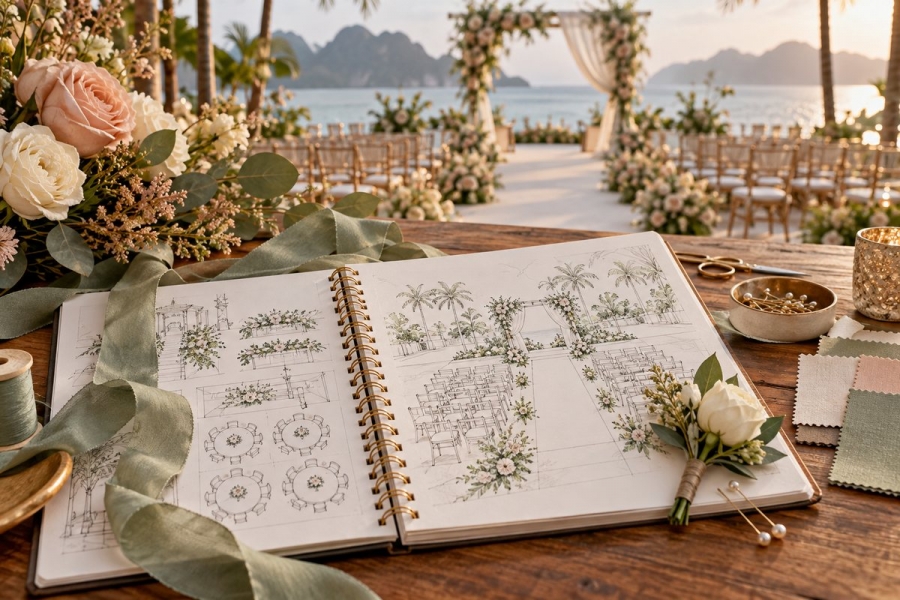
1. Turn ideas into a workable plan
A planner helps you connect your priorities with the venue, guest count and programme. You can discuss questions about layout, ceremony timings, photographs, catering and entertainment with one coordinating contact. Agree communication hours and response expectations at the start.
2. Understand the budget and scope
Planning support can make inclusions, exclusions and additional costs easier to compare. A planner does not automatically make a wedding cheaper; the useful benefit is a clearer scope and fewer assumptions. Review quantities, delivery, installation, hired items and applicable charges before booking.
3. Coordinate suitable suppliers
A local contact can help identify suppliers and align their arrival times, access and responsibilities. Availability and contracts still need confirmation. Share your priorities so photography, flowers, food and entertainment support the same programme.
4. Give someone responsibility for the schedule
On the day, supplier arrivals, setup checks, ceremony cues and changes of location need attention. Agreed coordination allows the couple and family to spend more time with guests while someone follows the programme and handles routine questions.
5. Prepare practical alternatives
Outdoor celebrations need a suitable alternative venue and an agreed decision process. Discuss guest mobility, dietary preferences, transport and setup requirements early. Planning can reduce avoidable problems, although no supplier can promise to remove every risk.
Explore our wedding flowers, decoration and packages and send us your brief to discuss the available options.